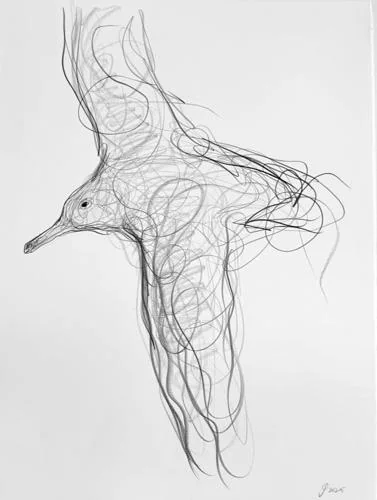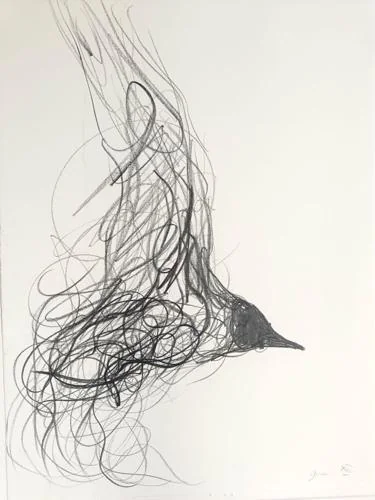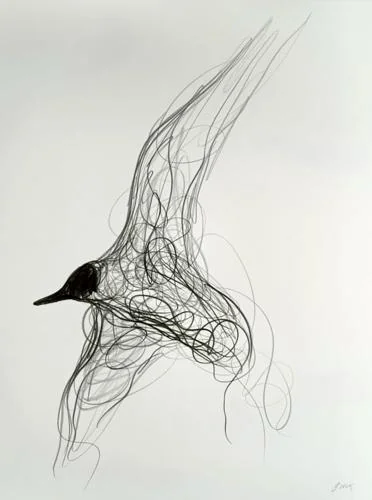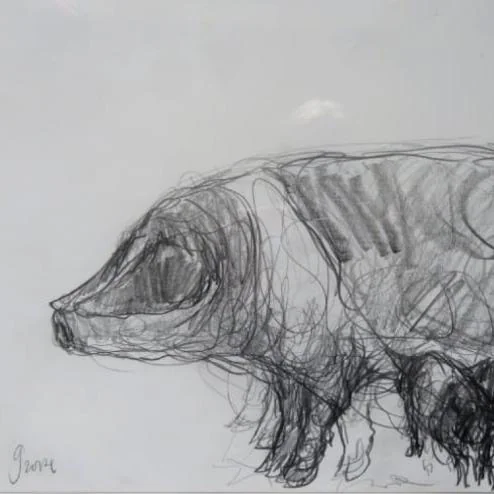
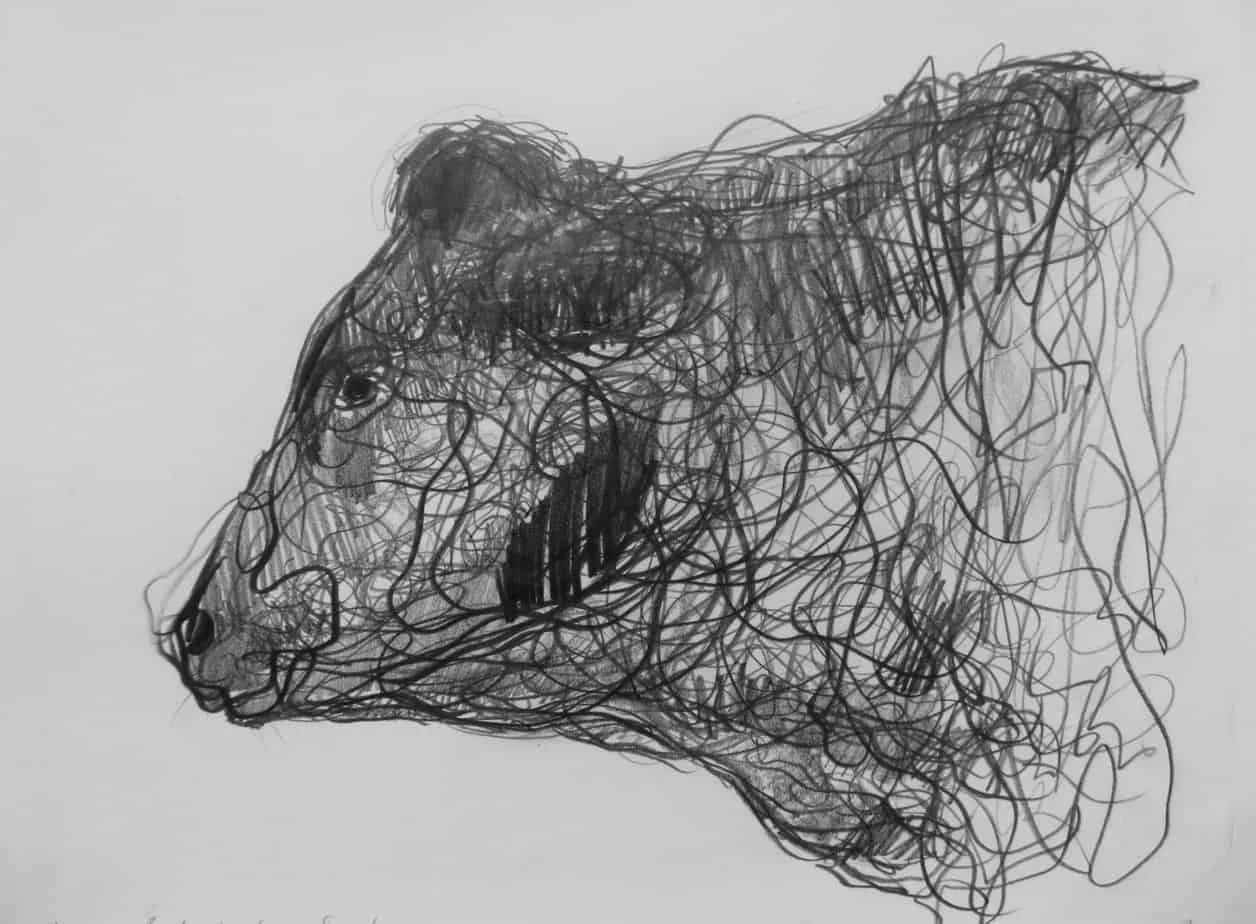
Drawings from the Alde Valley 2007
The landscape of East Suffolk is largely defined by its rivers. Through their quiet, continuous passage these have formed the lie of the land during the past few millennia. Overlaid on this basic water-worn topography, with small surviving remnants of wild woodland, are more recent patterns of settlements, byways, highways and footpaths, interspersed with secondary woodland, meadows, hedgerows and agricultural land.
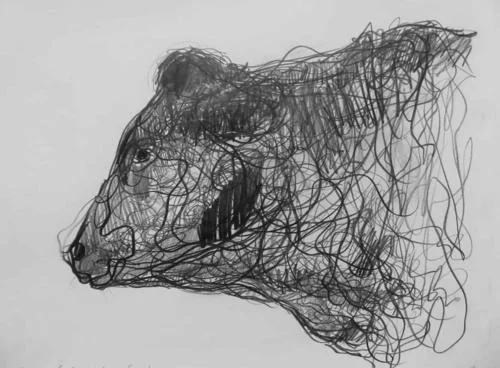
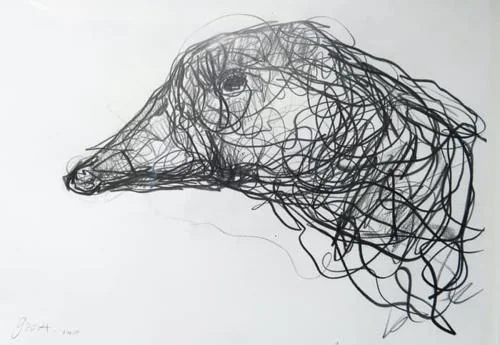
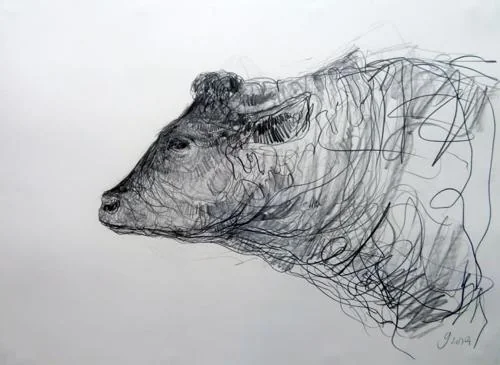
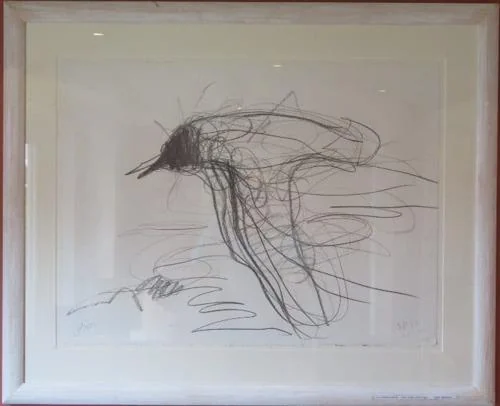
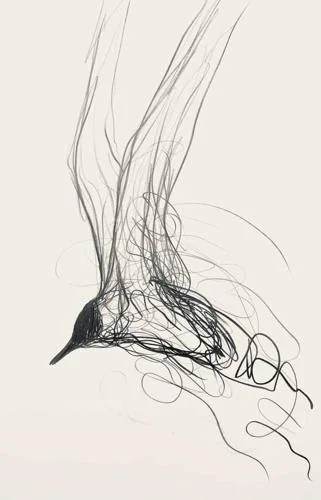
![]() Cow Turning, Gt Glemham |
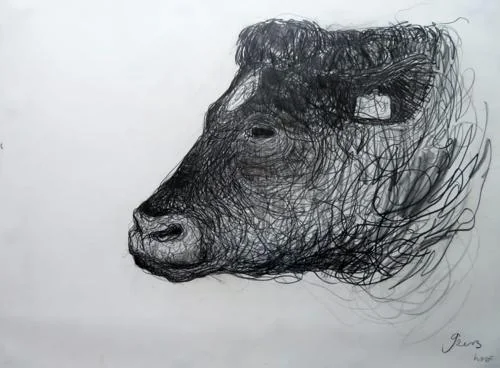
![]() Cow Looking, Gt Glemham |
![]() |
On the clay uplands or topland agricultural activity is characterised by continuous rotations of arable crops, typically wheat, beans, peas, sugar beet, oil seed rape and barley. As the clay gives way first to loamy meadow land and then, in the valley bottoms, to low lying sand and alluvial soils, the arable crops are replaced by a mixture of intensively managed grassland, water meadows, marshland and river valley woodland, including aldercarr and ash.
It is this low lying land and, specifically, the livestock that live on it that are the subject of this exhibition. At a time when the national press and the farming industry are riddled with stories about increasing regulatory burdens and tragic disease outbreaks, it is easy to forget that raising animals for food is a fundamentally important and, ultimately, a very straightforward activity. It requires care, dedication and application – and an abundance of accumulated knowledge.
![]() |
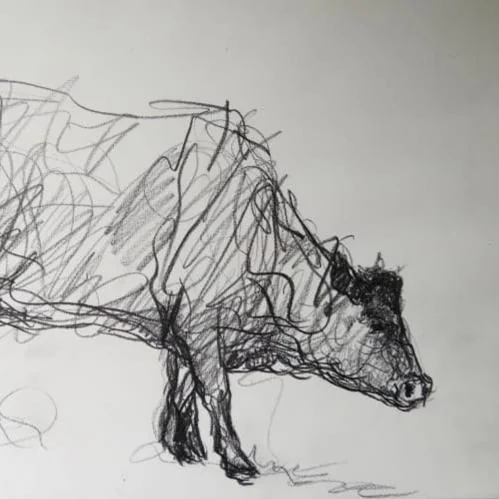
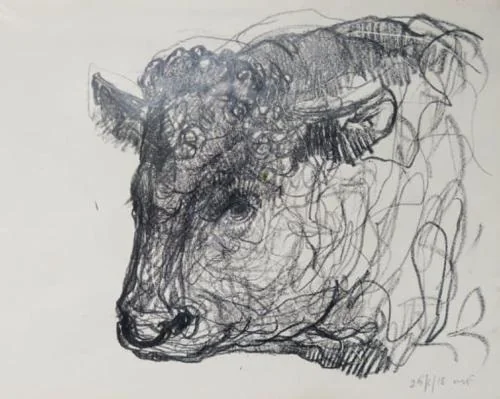
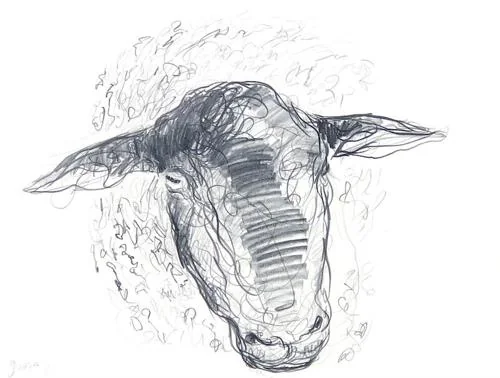
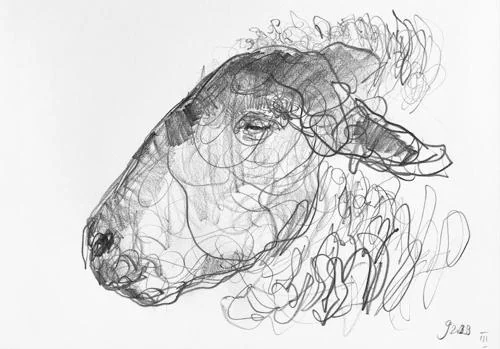
![]() Study of Heifer, Gt Glemham |
![]() South Devon Cow, Theberton |
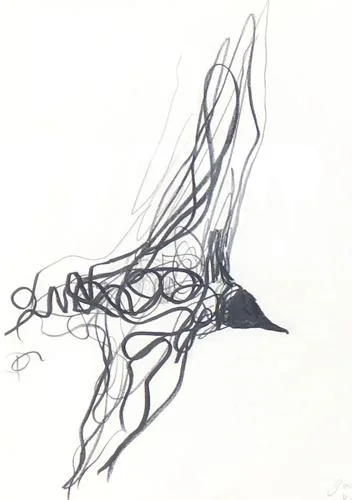
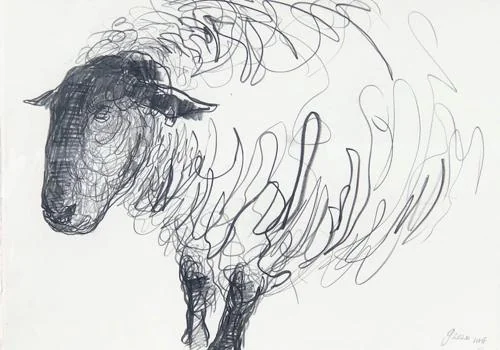
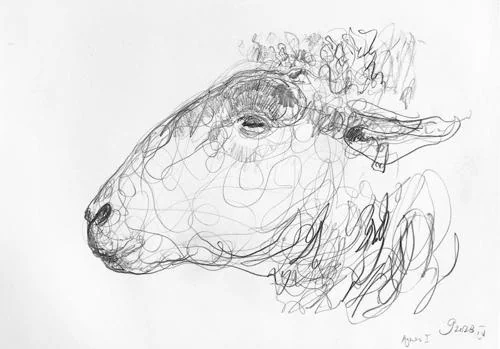
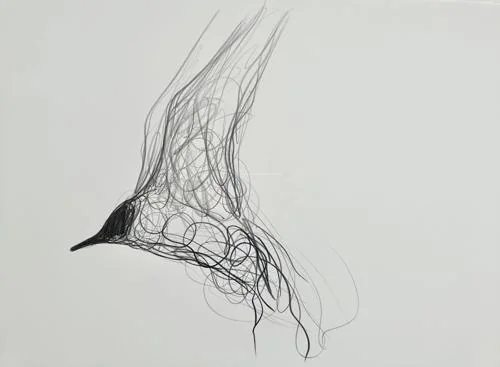
The drawings in the exhibition are presented as a small tribute to this centuries old practice of rearing and raising livestock in carefully managed landscapes. It is a practice without which we would have neither much food nor, in this area, the inland East Anglian river valley landscapes with which we are so familiar. Although requiring great skill and commitments to animal welfare, it is at heart a simple process. There is nothing more natural and human than carefully raising food and trading it or sharing it within local communites. It is these processes, and the value of farming traditions within rural communities, that this exhibition of drawings celebrates.
The drawings were all made in situ from life. They feature animals from two family-owned beef herds located on farms in the Alde Valley of East Suffolk. Peak Hill Farm in Theberton is owned and managed by the White family. Run on organic principles, the farm is home to a renowned South Devon herd which is sired by the family’s stunning prize bull, Welland Valley Stardust the IVth. Nearby, Linden Farm Beef is based in Stratford St Andrew and at Stud Farm in Great Glemham. It is run by two brothers, Joe and Robert Warne. During the past decade they have slowly built up a mixed herd of British and Continental cattle which graze upon pasture and water meadows in the Upper Alde Valley. They produce some of Suffolk’s finest beef.